An Introduction
For the past few years, I’ve followed the same ritual to end the year: dedicating the last weeks of December as a period of self-reflection and planning for the future. This framework of identifying the different ‘pillars’ of life that are most important to me, evaluating their health, and setting concrete goals to work towards has let me live the latter half of my 20s with intention. As I’m now officially in my 30s, I thought it would be a good opportunity to revisit this framework as an opportunity to think deeply on just how I want to approach my life in this next decade.
Life Pillars
The idea of organizing my life into categories came from one of my mentors who used a framework of Happy, Healthy, Wealthy
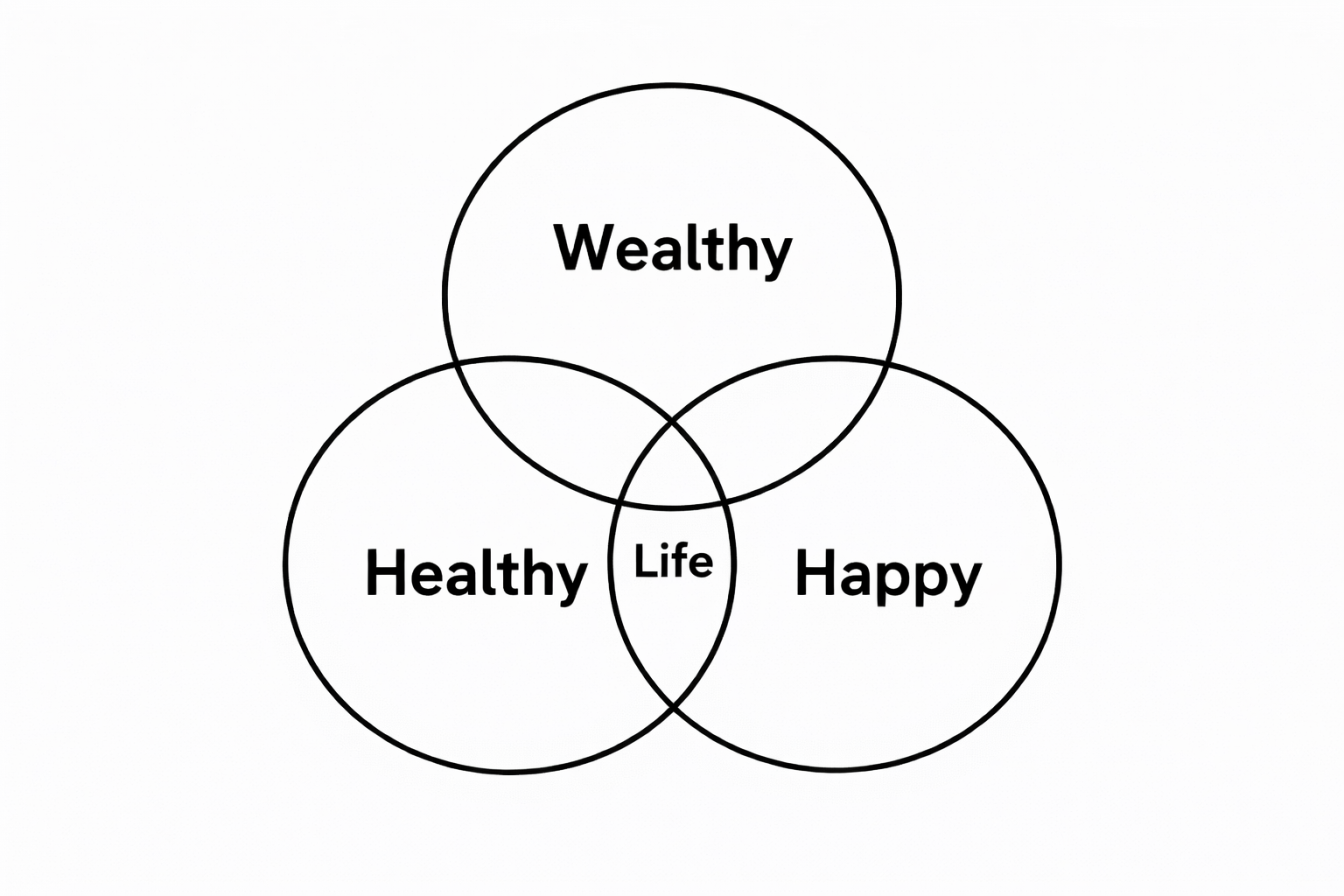
I liked this approach, but I wanted a bit more delineation. So I categorized my life into 6 core pillars:
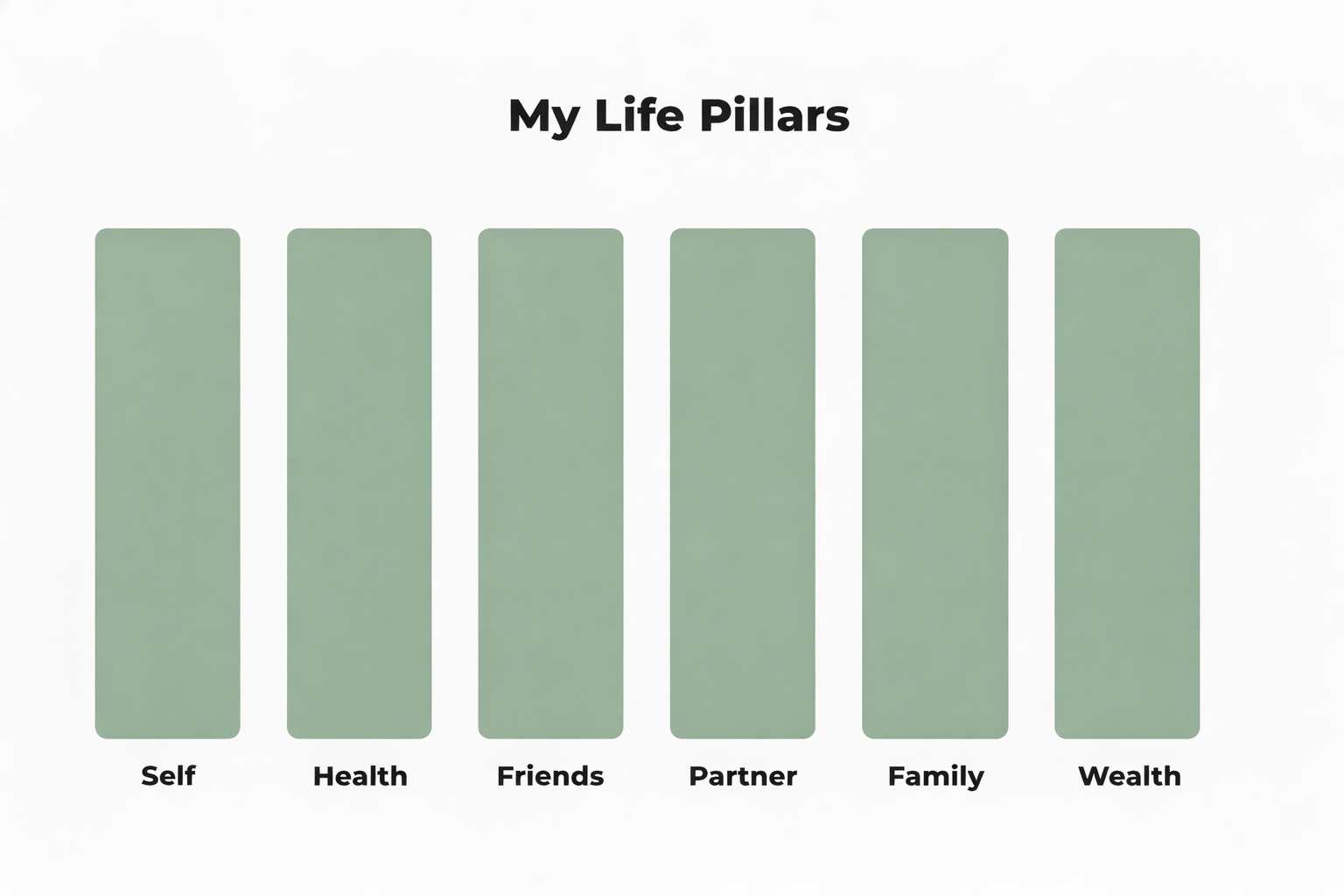
I identified these 6 areas as the most important pillars in my own life, and that almost everything I did or cared about rolled into one of these categories.
Self
This pillar consists of my relationship with myself, my interests, and my inner being. For me, this is the most important pillar. I truly believe that there is no ability more powerful than truly understanding who you are. The makeup of this pillar has fluctuated throughout the years — one year I prioritized traveling as much as possible. The next I dedicated my energy on reading, meditating, and journaling. This year, I’m focusing on living a more simple and minimalistic life. The process of growth and self-transformation has been a pivotal driver in my life, and having this rich sense of inner being is a crucial part of my identity.
Self questions to ask:
What am I interested in?
When do I feel most like myself?
What drains me, even if it looks good on paper?
What values am I unwilling to compromise?
If I had more free time, how would I naturally spend it?
Health
Pretty self-explanatory, but the health pillar deals with well-being. This pertains to general health, fitness, and mental. Health is the foundation that enables everything else in life. Over the years, my definition of health has evolved. At times it meant pushing performance and intensity. At others, it meant slowing down, prioritizing recovery, and listening more closely to what my body needs.
Ultimately, this pillar is about building a body and mind I can rely on. One that supports my goals, my relationships, and the life I want to live.
Health questions to ask:
How is my energy, day-to-day?
Am I getting enough high quality sleep?
How is my nutrition?
What are my fitness goals for next year?
How would I describe my mental state the majority of the time?
Friends
This pillar isn’t about simply having people around. It’s about the quality of those connections.
It’s important to identify a definition of what one thinks makes them a “good friend” and what makes others a “good friend.” If we don’t, how can we make sure we’re surrounding ourselves with high quality individuals that support us? And conversely, how can we make sure we’re showing up consistently for the relationships we care about?
Good friendships aren’t built on convenience or longevity alone. They’re rooted in shared values, mutual respect, and aligned life direction. They share laughs and good times, but also are there during the hard times. Good friends aren’t afraid to constructively critique, but are kind and direct when doing so.
Friendships also require upkeep. Like plants, they wither when neglected. Small, consistent actions matter. An example is whenever someone crosses my mind and I realize it’s been a while, I set a reminder to send them a text. It’s a small habit, but one that helps keep the relationship alive and intentional.
Friends questions to ask:
Am I showing up as the kind of friend I’d want to have?
Are there specific friends I want to reconnect with?
Am I looking to cultivate new friendships that align with my values and interests?
How often am I proactively reaching out versus reacting?
Have my friendships evolved as I’ve changed?
Family
Historically, this pillar was simple. It centered on being a good son and nurturing my relationship with my parents.
Over time, the scope has naturally expanded. Through marriage, family is no longer just defined by who raised me, but also by who I’ve chosen to build a life with. It now includes my mother- and father-in-law, as well as my new sisters and brothers. This shift has required a broader definition of what it means to be present, supportive, and intentional across multiple family systems.
To me, family is all about maintaining strong relationships while respecting boundaries, traditions, and differences. It’s learning how to show up in ways that are thoughtful, consistent, and sustainable.
I wouldn’t be surprised if this continues to evolve. As life progresses and children enter the picture, family will likely blend even more closely with the next pillar.
Family questions to ask:
Am I showing up as a good son today, not just historically?
How intentional am I with time and communication with my parents?
How am I building trust and connection with my extended family?
What traditions or rituals matter to me moving forward?
What kind of family culture do I want to help create long-term?
Partner
This pillar represents the intentional partnership I’m building with my now wife. It’s about trust, communication, and choosing each other daily, not just in moments of ease, but especially during challenge and change.
A strong relationship, to me, is not defined by constant harmony. It’s defined by how we navigate struggles together, support one another’s growth, and continue to show up for each other.
It’s also important to pause and enjoy the life we’re building together. One simple habit that’s been especially meaningful is sharing what we’re grateful for before going to bed. It helps us reframe how fortunate we are and serves as a quiet reminder of how lucky we are to have each other.
Partner questions to ask:
Are we aligned on values, priorities, and long-term goals?
Are we communicating openly and honestly?
When do we feel the most emotionally connected?
How does my partner want to feel loved, and how can I do more of that?
Where do we see our relationship in the next year? How about the next 3 to 5 years?
Wealth
This pillar represents my relationship with money, security, and long-term freedom.
Earlier in life, wealth was about stability and proving I could take care of myself. Over time, it has evolved into something more intentional. It’s about building systems that compound quietly in the background while I focus my energy on the parts of life that matter most.
Wealth is not isolated. It directly supports health, relationships, and peace of mind. When managed well, money becomes a tool rather than a source of stress. The goal is not to maximize income at all costs, but to create a financial foundation that supports a simple, meaningful, and flexible life.
Wealth questions to ask:
What does my rich life look like?
What does my allocation of savings and investments look like?
What are some areas where I can cut back on unnecessary costs?
What are some areas where it’s worth it to spend a little more?
What systems can I improve to reduce financial stress?
Evaluation Criteria
After identifying the personal life pillars, the second step is to evaluate and rate how I feel about each one.
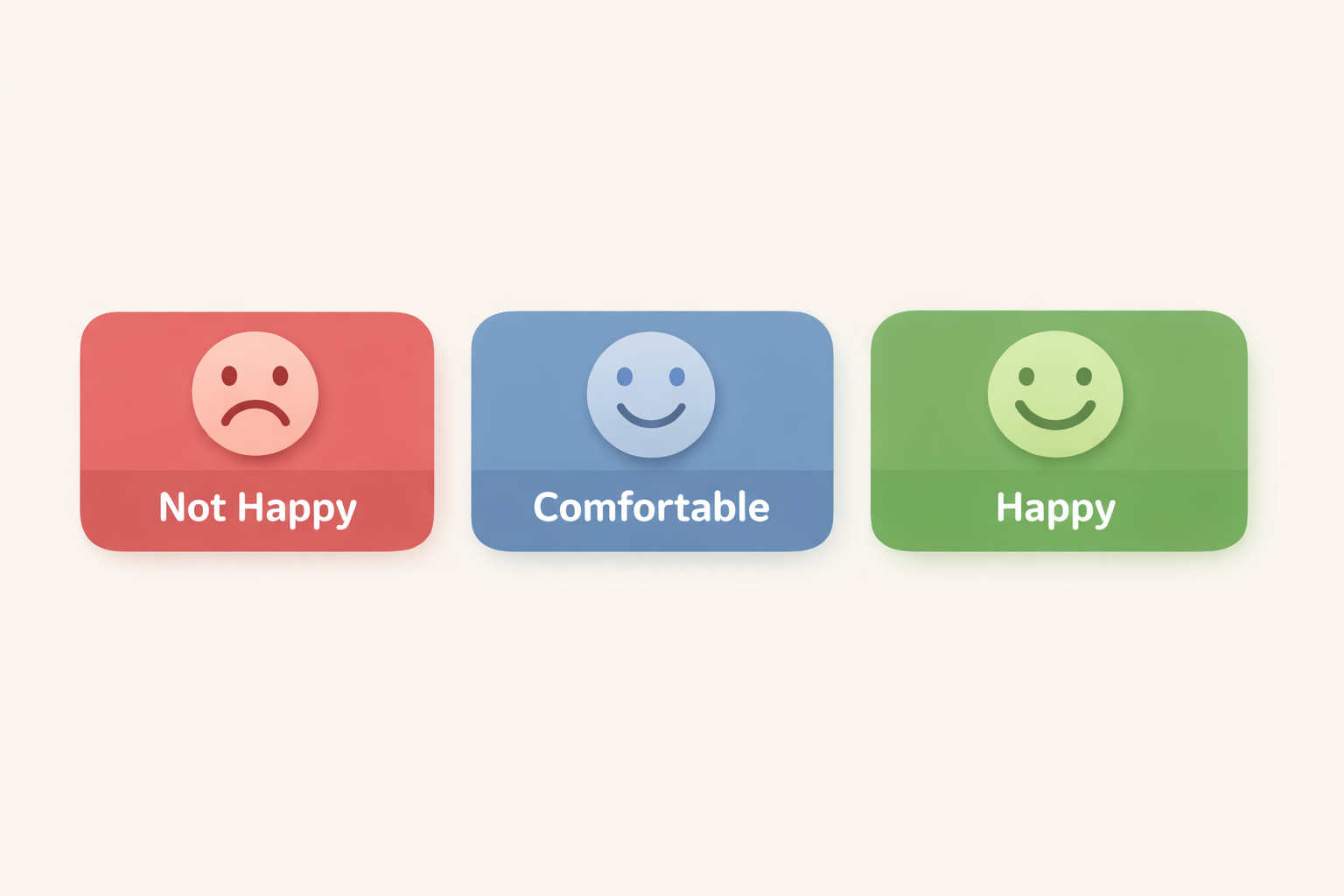
Rating
Not Happy
- Not happy means that I may want or even feel a need to make drastic improvements or changes in an area of my life.
Comfortable
- Being comfortable means that I am overall content with where I am in this area of my life. It may not be perfect, but it also isn’t so bad where a drastic change is needed. This may even seem bordering on the happy rating. I’d say the biggest difference is that there’s still room for improvement and a sizable gap from where I currently am and where I eventually want to be.
Happy
- To me, being happy means I’m satisfied with the efforts I’ve put into this specific area and have achieved goals that I’ve previously set out to accomplish. It doesn’t mean complacency, but rather an acknowledgement of the progress that’s been made. For example, I’d currently classify my partner/relationship pillar as happy. Not because there’s no more work to be done, but because of the continuous effort we’ve put in the past year in planning a wedding, honeymoon, and growing as life partners. If a pillar is rated as happy, maintenance and steady growth is typically the forward looking goal.
Self Reflection
Next, I spend some time to deeply reflect and ask myself questions — both generally about life, and about each pillar. The point of this exercise is to be honest with myself, even if the answer isn’t what I want to hear.
General Life Reflection
- How would I describe the person I am today?
- How would I describe the person I want to be in the future?
- What measurable goals can I set for myself to become the person I want to be?
Pillar Reflection
For each pillar, I ask these questions:
- What have I done well?
- What could be improved?
- What are some measurable goal(s) that I can set for myself?
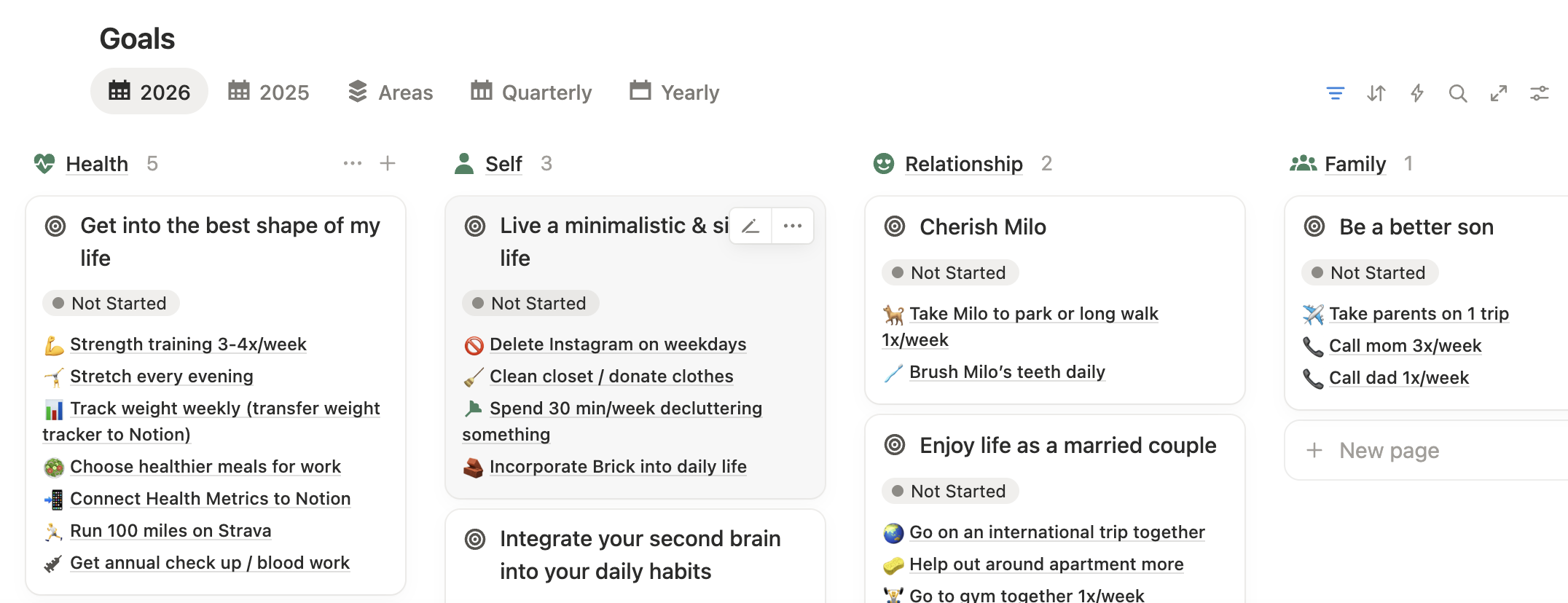
Forward looking, I set specific goals and intentions for the following year. For each pillar, I identify a few goals or objectives. And within that objective I identify a few key results. An example goal I have is that this year I want to be able to do a muscle up, so a key result will be incorporate bodyweight / calisthenic specific training 1x/week.
Yes, I’ve become a meme and incorporated OKRs into my personal life.
Intentions
- What themes do I want to shape my daily life next year?
- What 2 pillars do I want to prioritize?
I also set specific intentions, or themes that help remind myself of how I want to remember the year. These are usually short, typically one sentence framings that I can incorporate on a daily basis. For example, this year my intention is to live a simple and minimalistic life. I’ll add this to my wallpapers or write post-it notes around the apartment to give me visual cues and reminders about the mindset I want to keep.
While I’d love to think that I can be the best at absolutely everything, the reality is that life will throw wrenches and they’ll be pillars competing for each other. Because of that, I identify the top 2 pillars I want to make the most progress in that year. These aren’t absolutes, but help with acting as a guiding principle and tiebreaker when there’s competing priorities.
Closing Thoughts
This framework isn’t about productivity-maxxing or over optimizing my life, but rather creating a system to incorporate self-reflection > accountability > action.
I can confidently say that the single most important inflection point in my life has been moving from living life on auto-pilot to living with intention. Living with intention means being deliberate about how I spend my time, energy, and attention, rather than letting life default for me. It’s about closing the gap between what I value and how I actually live.
If my 20s were about discovering who I am and why I do what I do, my 30s are about acting on that clarity and choosing to shape my life consciously, one small decision at a time.
“Those who have a why to live can bear almost any how.”
— Viktor E. Frankl, Man’s Search for Meaning