It has many names, but most knowledge workers probably have reached that flow state of ‘deep work’ where you’re able to focus solely on a particular task at hand that’s complex and deep. In his similarly titled book, Cal Newport defines this as “professional activities performed in a state of distraction free concentration that push your cognitive capabilities to their limit. These efforts create new value, improve your skill, and are hard to replicate.”
This nirvana is something many knowledge workers crave. That block on a Friday when you have no meetings, you can put on your favorite tunes to block out the rest of the world, and you’re actually able to get shit done. If you’re a software engineer, this means sitting for hours and writing hundreds of lines of code. If you’re a consultant, this might mean churning out that beautiful 50 slide deck for an important meeting. If you’re in marketing, this might mean writing that multiple page draft for the upcoming release.
Most of my best work has come from these moments of deep work. And while rare since the nature of my role requires me to be in meetings all the time, it’s easily the favorite part of my job.
But with the advent of AI tools has also come the biggest shift in how we work. What used to be typing code line by line has changed to describing what you want to a coding agent. What used to be spending hours brainstorming the perfect copy is now using AI as a thought partner to refine messaging. And even the process of beautiful design looks completely different than what it did just a few months ago.
The job has shifted from doing the task at hand to orchestrating agents to do the task for you. Now, not too long ago this required a lot more micromanagement and the quality of the output was extremely inconsistent. But the models have gotten very good, very fast.
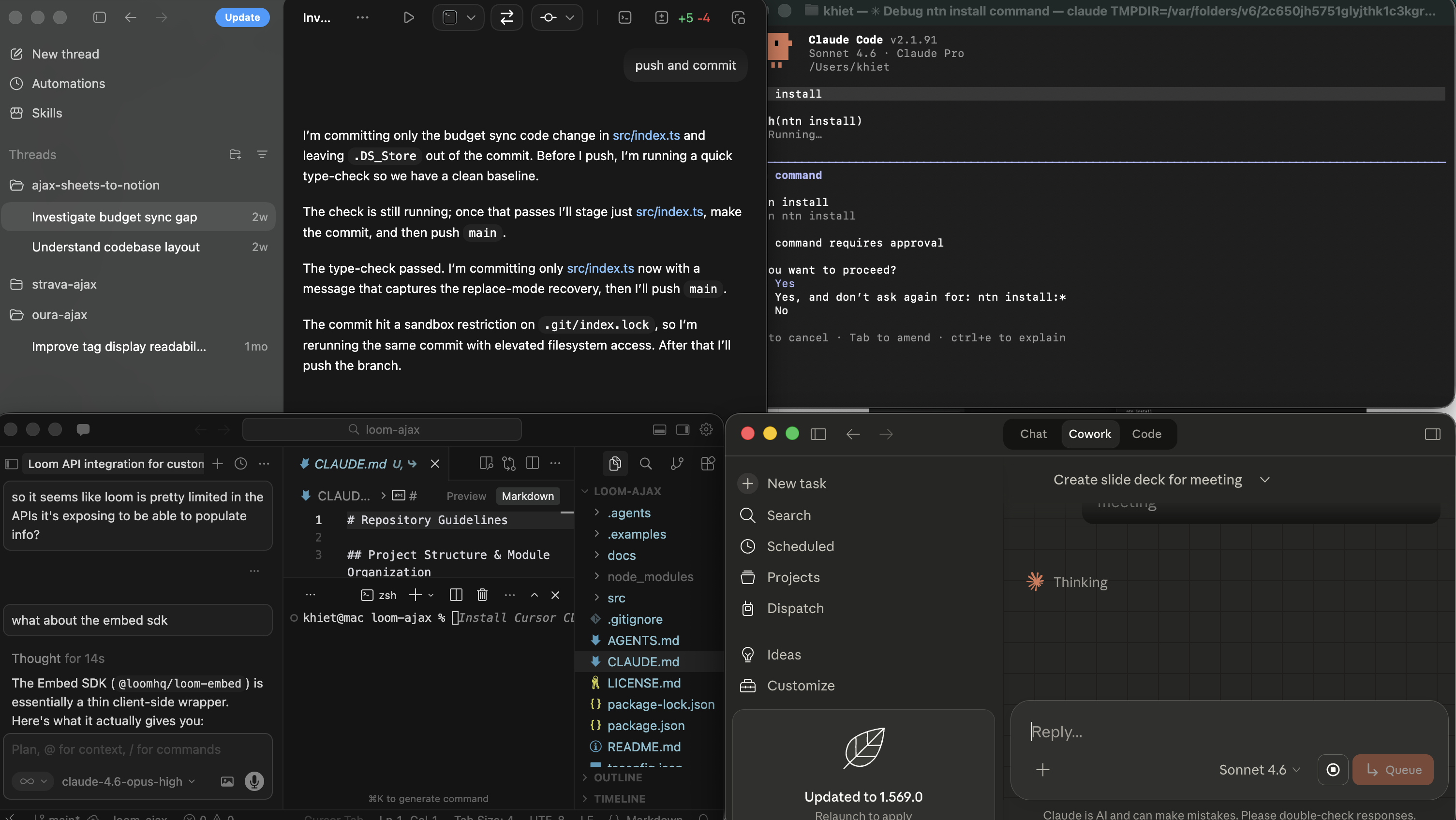
Now, deep work and flow state looks more like firing one agent to work on a task, checking on the status of another agent working on a completely separate task, while a third does research on a future item you might want to tackle, and then maybe doing a little doom scroll while you wait for everything to finish.
It’s a pretty insane feeling. It’s no longer a question if I can do something, but more of what should I do.
AI Brain Fry
I’m not going to lie, this new way of working is just straight up fun. Complex projects that used to take months of deep work are now shortened to weeks or even days.
But I have a lot of concerns on how this affects our mental well being. We’re now context switching more than ever, and the feedback loops are nearly instant. Not only that, but there seems to be an increasingly larger emphasis on velocity and output. It’s like being in a casino and playing blackjack, sitting at a digital roulette table, and pulling a slot machine all at the same time.
In Harvard Business Review’s recent study When Using AI Leads to “Brain Fry”, researchers saw that ~14% of AI users report brain fry symptoms. The impact:
- +39% increase in major errors
- +33% increase in decision fatigue
- 34–39% intention to quit
I’ve noticed this personally as well. At the end of the work day I feel more drained, a bit numb, and a ton of brain fog. My evenings used to be sacred time to read, write a bit, or work on my personal productivity projects. But now, I just want to shut off my brain and do something that doesn’t require any thinking.
Touching Grass
So what do we do? AI and agentic tools are likely here to stay, so after a full day of orchestrating agents and context switching between tasks, we need to find a way to deal with this mental fatigue.
One thing my team has been hearing me say a lot recently is the need to go ‘touch grass’. I believe it’s important to counteract the new world of knowledge work with the complete opposite. Being in nature, and long walks with no technology. I’ve even recently bought a Brick to literally not give me the option to use my phone. And when I put the screens down, it’s easy to realize that talking to machines all day just feels lonely.
Human connection is more important than ever. We spend all day talking to these AI chat bots that it’s easy to forget the joy of getting to know another human being and bond over shared interests. It's probably why I've been gravitating more towards in-person events and why return to office doesn't bother me as much as it used to.
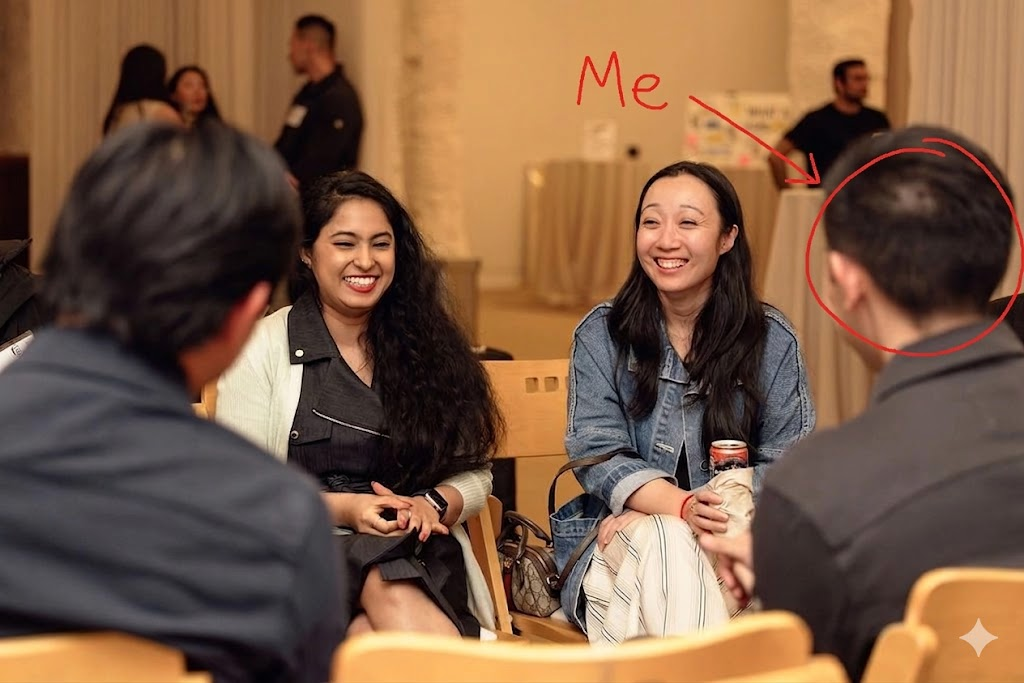
Last year in New York, a colleague from Sydney was teaching me some Australian slang. One thing she shared that really stuck with me was the term ‘D&M’. This is an emotional conversation that goes beyond surface level. Also known as deep and meaningful. It’s been a while! Are you free this Friday for some D&M? It was great hanging out last night, I really needed that D&M.
It’s so simple, and yet so beautiful. We’re social creatures, and one of the greatest joys in life is getting to know one another. Where we came from, how we became who we are, our dreams, and our vulnerabilities. Nothing beats seeing and being seen by another human being.
The weather is going to be beautiful this weekend. I’m hoping to disconnect, try my best not to talk about AI, touch grass, and do some D&M with the people I love.